Two long walks to find things
I’m thinking a lot lately about creativity.
Making things has always been something I’ve just undertaken, very naturally and often without much self examination. But over time, that self examination, that reflexivity seems to just grow from the act of doing.
As the act of making comes naturally, so then does the act of reflecting on it.
We live in a time when the act of cultural making, in the broadest sense, is under threat. Unimaginably well-funded organisations are trying to short circuit making as if doing so were a benefit to humanity. It is not. It doesn’t take a genius to work out that a machine fuelled by pre-existing material, which replaces that material, is doomed.
I was thinking today about some of the unseen parts of my practise. I often travel to find the things which drive and feed my work. But it is rare that I pick a place on a map to go to with any great deliberation. I find it’s better to just go, and see what you find. Being able to find interesting things wherever you go is a skill.
That skill does not survive so-called “AI”. That process is about doing the opposite. About going nowhere, experiencing nothing, synthesising nothing from the world around you. It’s quite purposefully about removing the need for that and accepting an ersatz version of experience. I do not accept that as equivalent. It’s nothing like equivalent.
The whole Maskwitches project began as an exploration of what so-called AI was, and what it could do. I used it thoroughly, and with a hungry curiosity, in order to understand it, and then utterly rejected it as a method for making some years ago. It's good to be curious. It's good to make decisions.
It is in this context that I’m thinking about a pair of specific expeditions I wanted to talk about. It’s worth mentioning that these involve physical travel, and often walking considerable distances. That specific activity isn’t open to everyone. But it’s intended more as a symbol of activity than an exclusion through physicality.
The same activity can be undertaken in as many different ways as there are creators. And I harbour a burning fury that we, as human creatures, are all creators, if we choose to be. Merely desiring it is enough. Upon recognising that desire, we are all presented with the same challenge of “how?”, which we must all answer for ourselves. And the act of answering is the art. Travelling and walking is a part of my solution. Yours will be different, whether travelling and walking is something available to you or not.
One such expedition that springs immediately to mind is a visit to a nature reserve in the north of Scotland, near Lossiemouth. The holidaying family didn’t want to walk all the way down this long, desolate stony strand, but I did. The stones of the beach were larger than average, and tricky to walk on. They clattered and made resonant sounds as you disturbed them.
The place was exposed, the horizon flat. The weather was a very particular way. Hard to explain in words, but fresh, the air feeling full of ozone and electricity. Something was there, a numinous state that’s hard to explain, and I had to look for it, whatever it was.
Human beings can smell approaching rain better than sharks smell blood in water, did you know that? As individuals, we often don’t know we can smell rain a mile away. But we can. Perhaps our ancestors lived in low lying Doggerland where knowing the rain was coming was an advantage that persists? A fanciful thought. What was the feeling of knowing which I was experiencing? So much of my practice is about this.
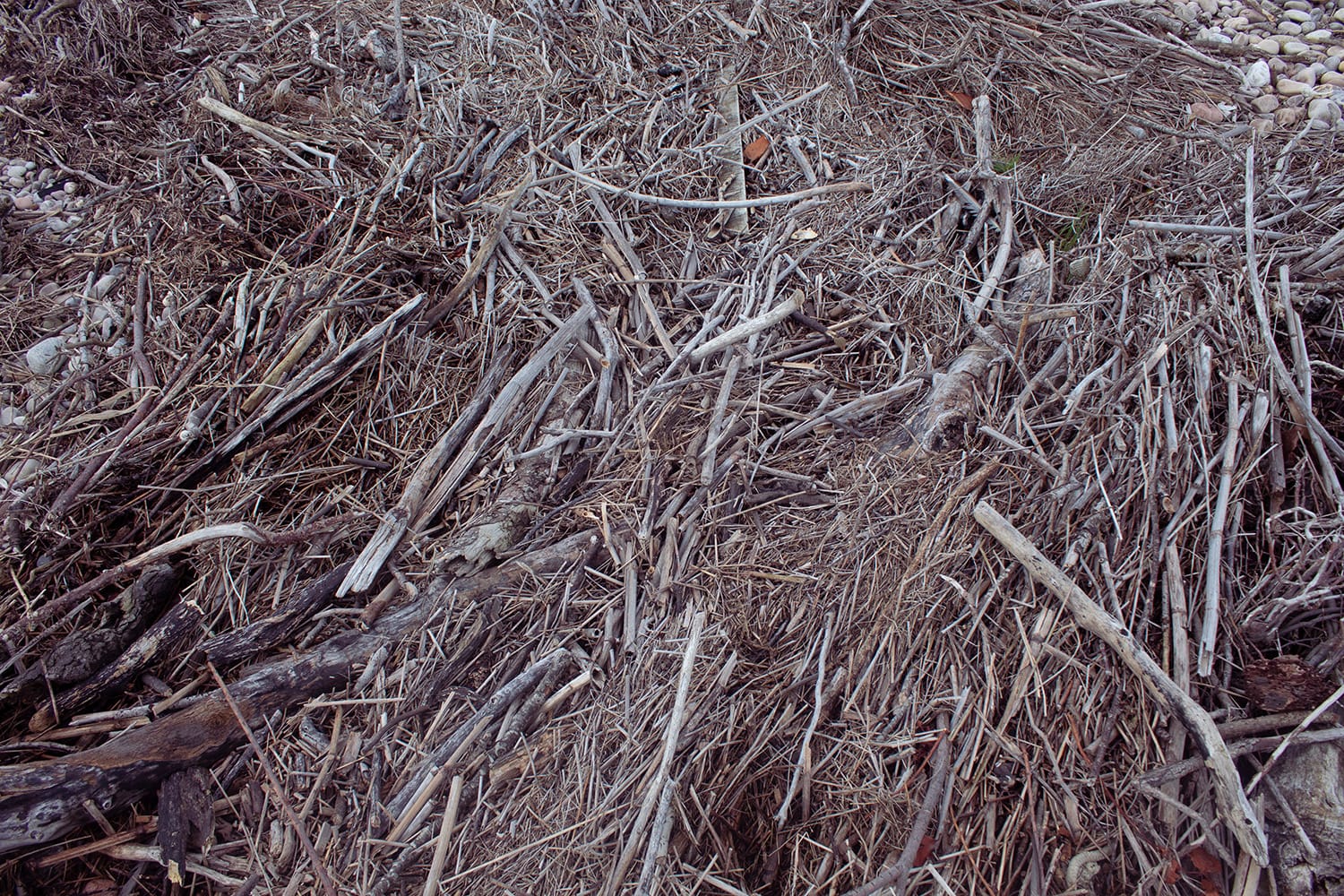
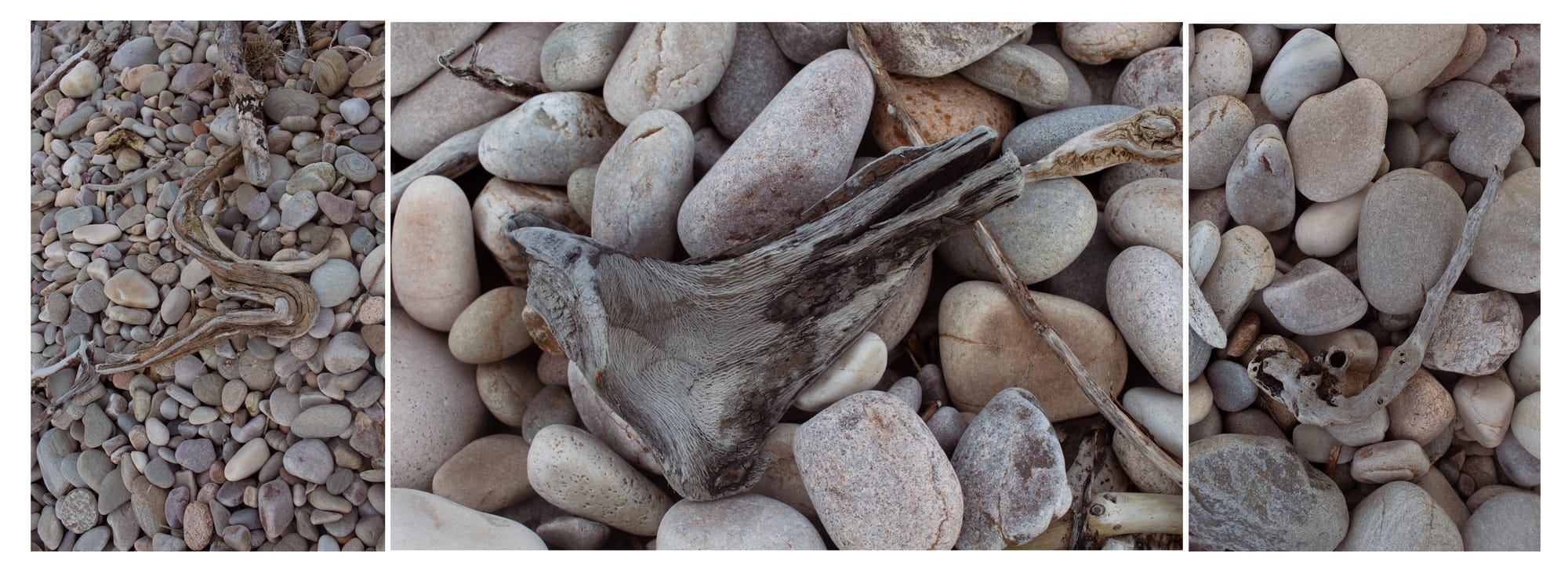
Walking along this round-pebbled spit of beach I passed beyond the distance most visitors are willing to ramble. Amazing driftwood started to appear. Seaworn and lovely. Unstolen by the less committed beach hiker. I had no intention of taking any of it - might as well steal a church pew or the shoes of the faithful while they pray at the mosque. I observed it. Observed it. It was there, I was there, at a specific moment. Pulled it into my brain to float around in there forever, ready to be called upon, or to bob up to the surface unbidden later when thinking about something else. Helping me turn what they call "a disorder” into a way of life and a good living as a maker. Always thinking about everything. Always connecting the unconnected. Turning seeing into doing.
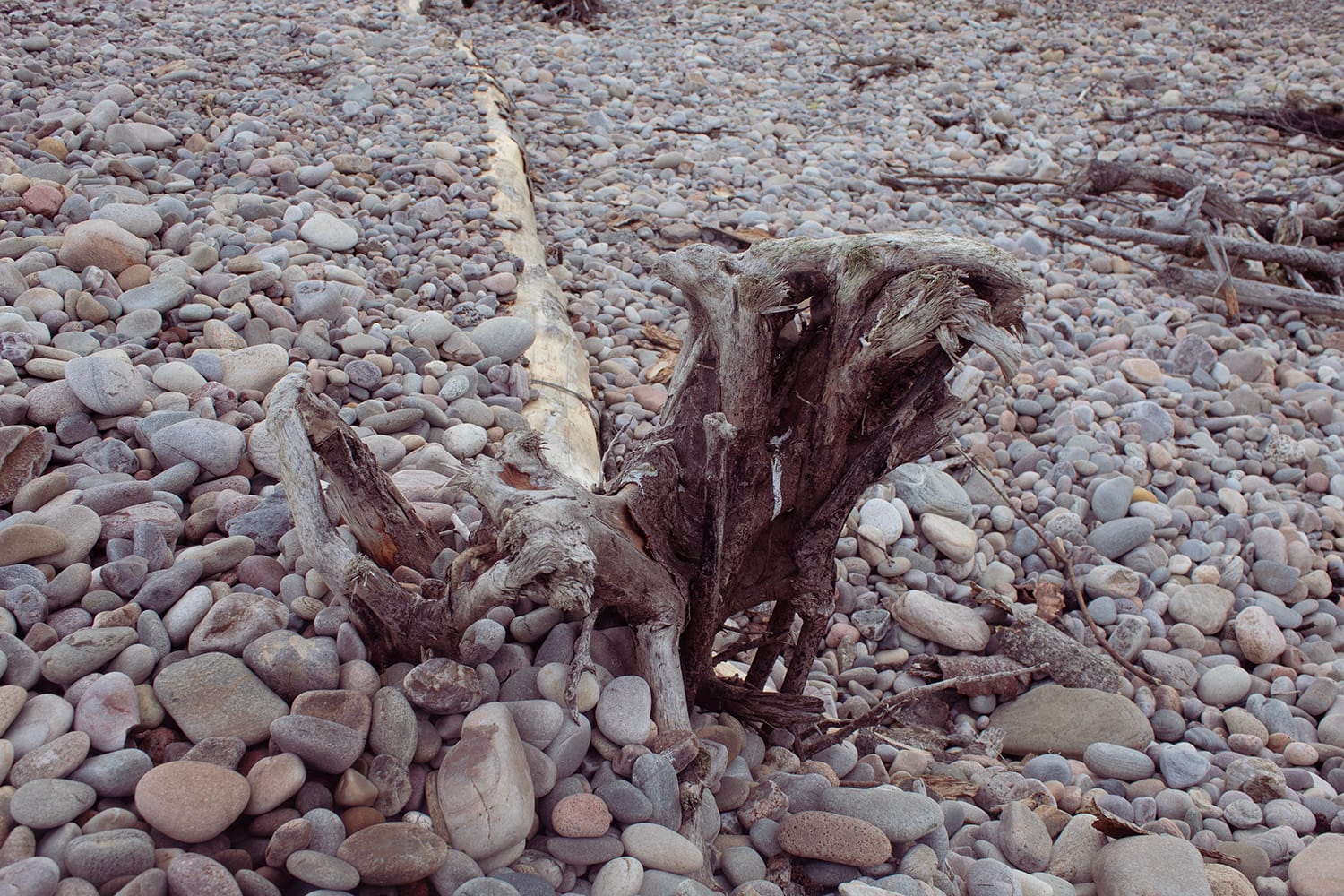
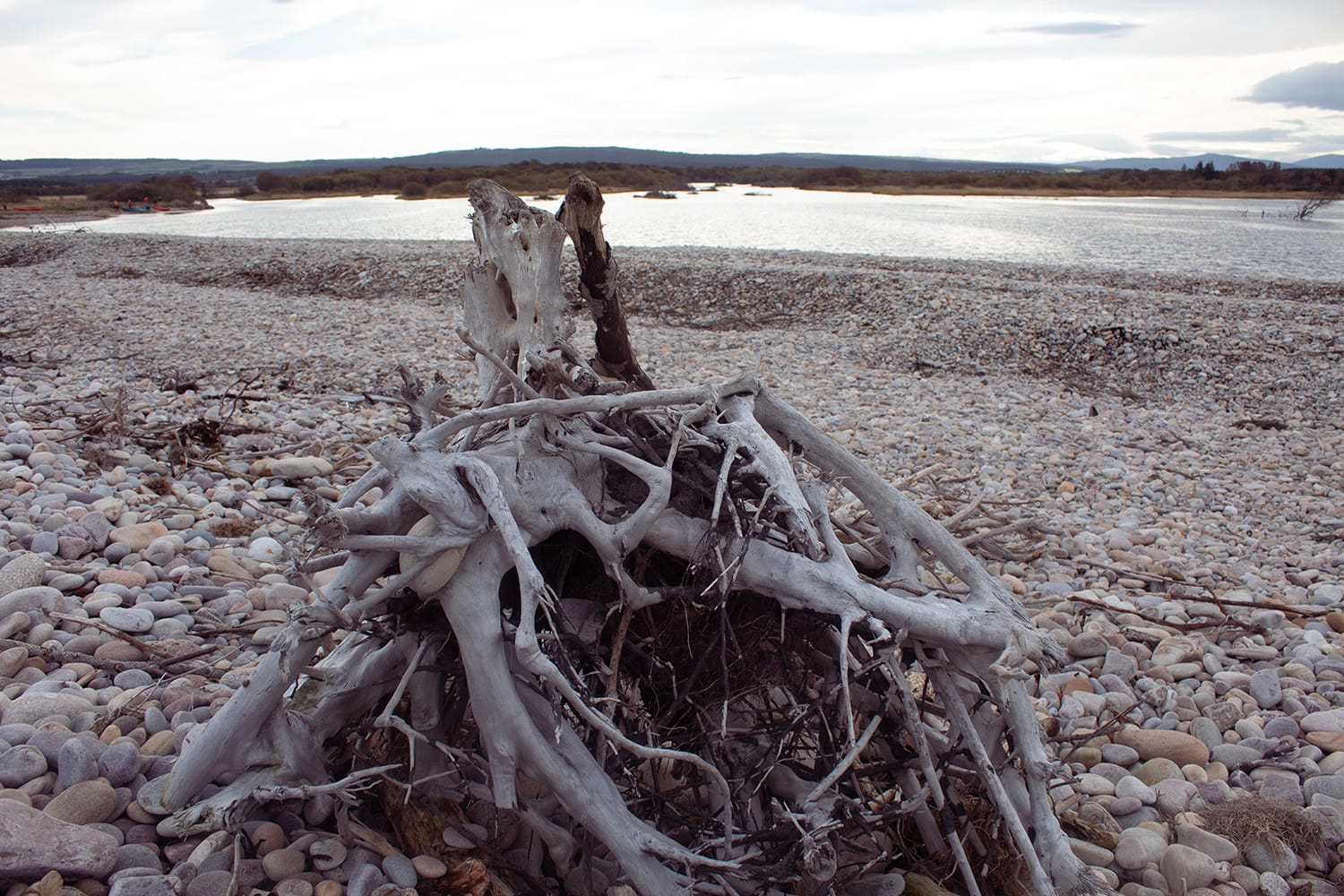
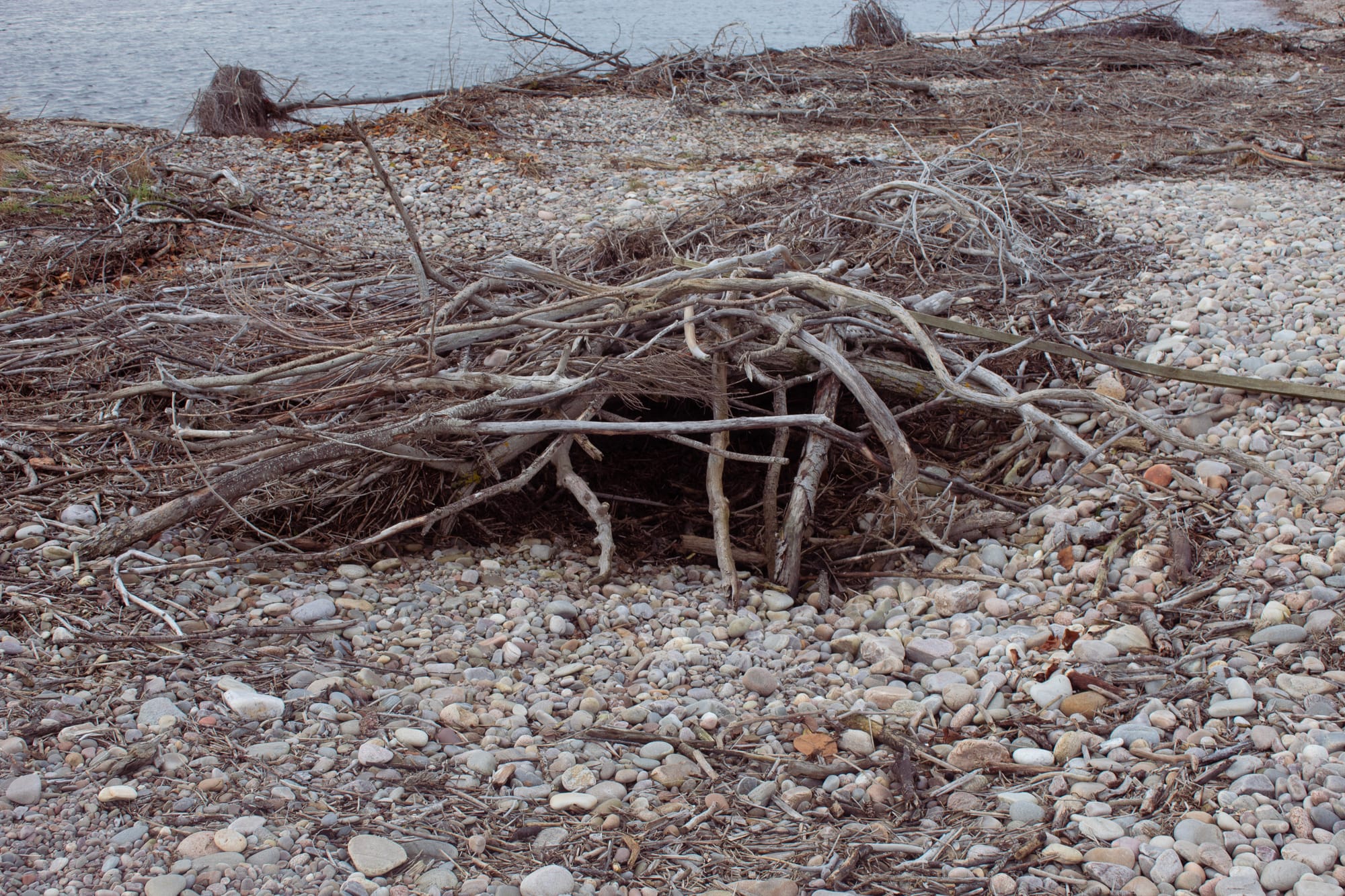
Even further along this concussive land of rounded stones, strange shelters. Constructions of driftwood, whether made to shield a cider drinker’s fire or a fisherman’s bivouac, there was no way to tell each one’s specific purpose. Low-lying, spaces you’d crawl into to sleep. Quite unexpectedly beautiful. Were they even made by people? Or did they just have that appearance?
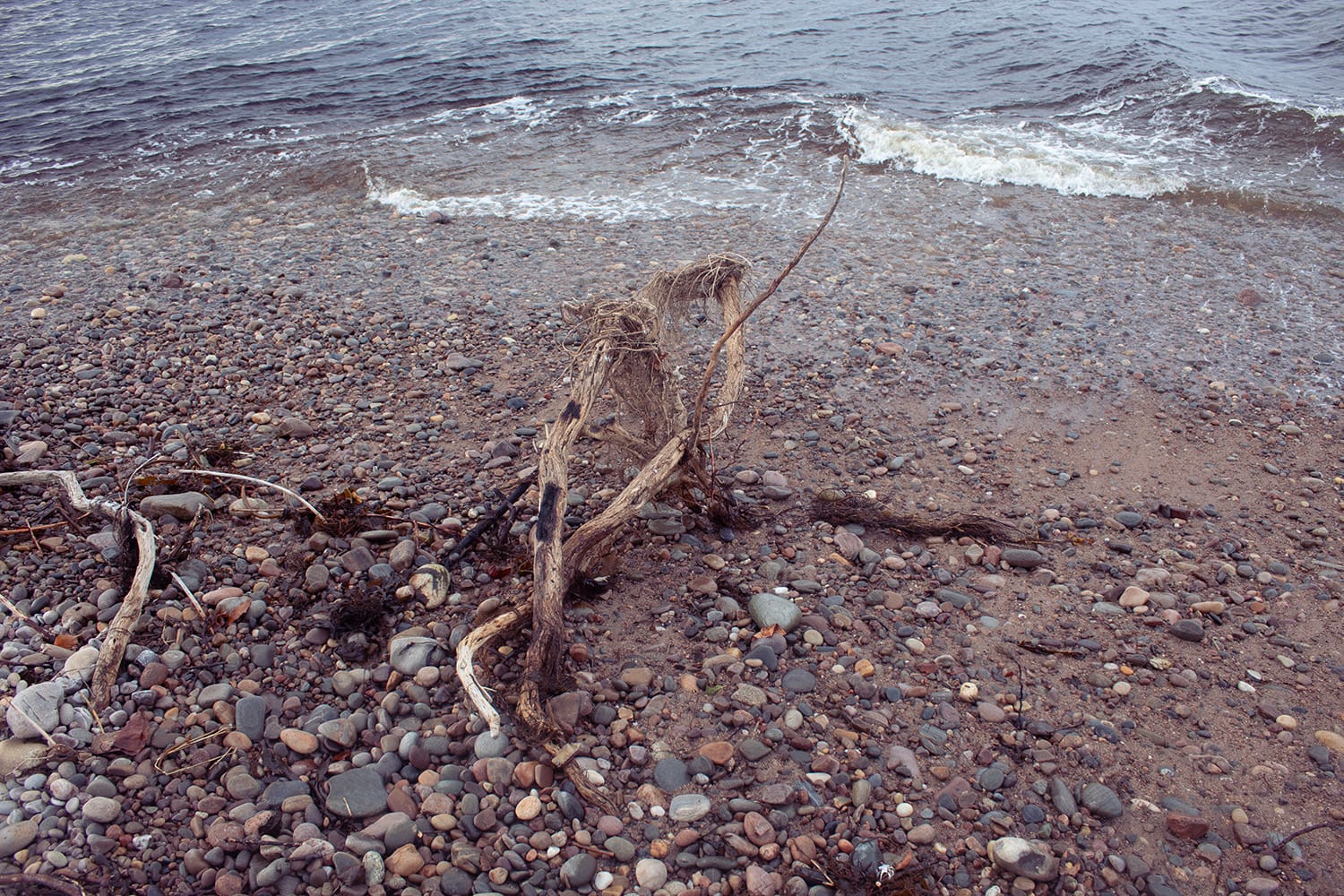
Right to the end of this finger of land, pointing out across a wide estuary. Watching the birds swooping low to the water, collecting photographs of strange things washed up that morning, or months before in the last spring storm. Absolutely alone. Feeling it.
And then walking back, regretting the distance I’d hiked off, paying the price of that precious solitude because you always have to trek back. Re-entering the people zone, nodding to strangers, reconnecting with the family who didn’t want to walk that far.
“Was it good? Did you find anything?”
“Yes”
Another day, another long walk, this time to Howick Mesolithic house. On the fringes of Doggerland.
Were the cliffs of Northumbria there in the Mesolithic era? Were they glacier-ground into the skin of the earth before the Mesolithic era, or were they worn away by meltwaters over centuries, as the North Sea grew and took up its current position? I’ll need to read about that. Are cliffs just half a hill? Did people moving out of the flooded Doggerland see cliffs on the horizon and did they know that climbing them would provide them with safety from a coming tsunami, or their loss of hunting grounds to sea water? We’re compressing time again.
Maybe no one understood anything about that process at the time it was experienced and groups of people moved over long generations, the changes in sea level so gradual as to be imperceptible to individuals. What does something imperceptible to a single human mean to a single human? Connections, networks, stories, being alive through connections.
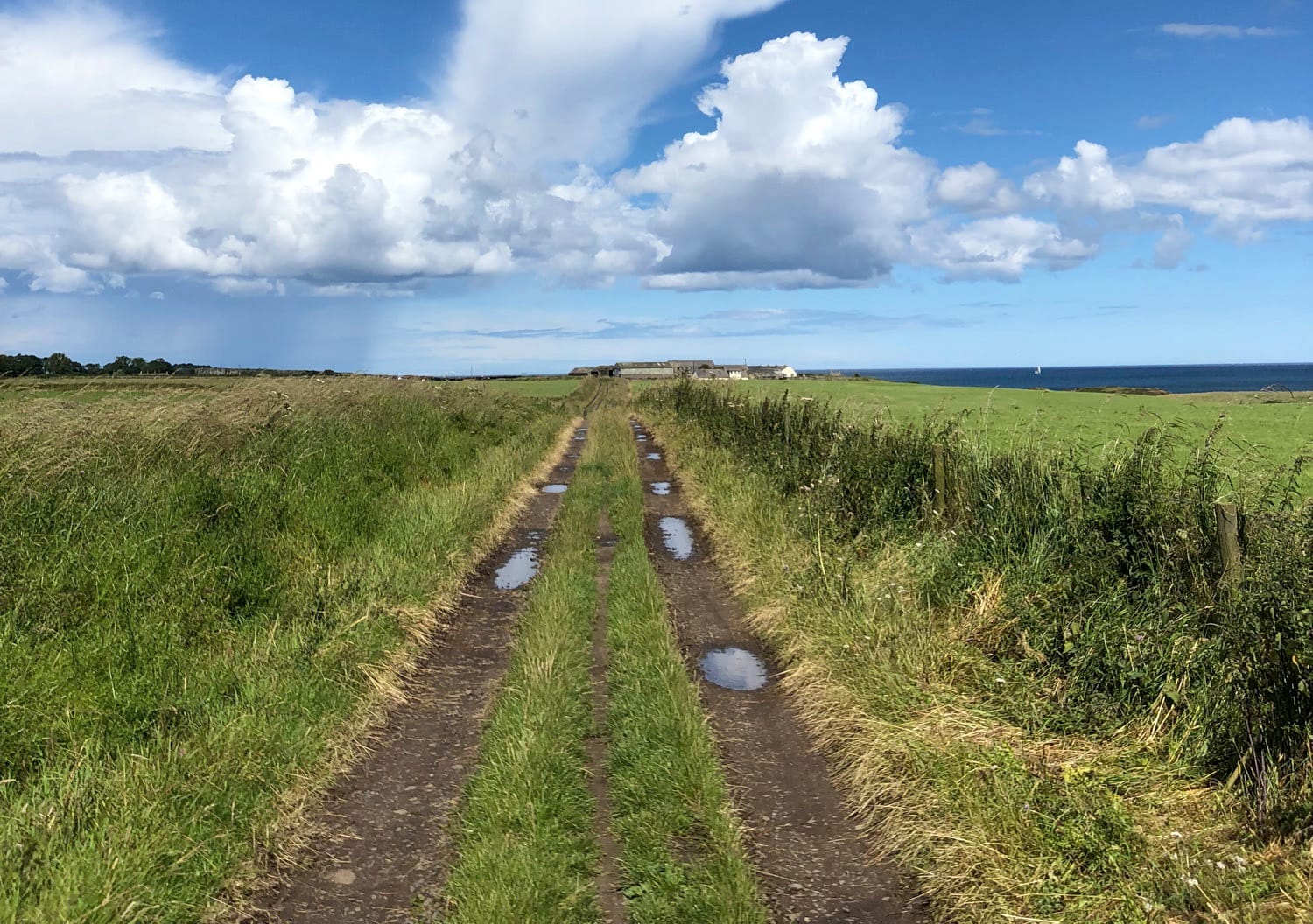
The farm track to Howick Mesolithic house is long and straight. Parallel lines of tyre-worn ruts. It’s a long and featureless walk, and the sun is hot. When we find it - I’m not alone this time, so I know I have to maintain a conversation, and my time for feeling out the place will be limited - it’s a nettle patch. A walled-in enclosure completely overgrown.
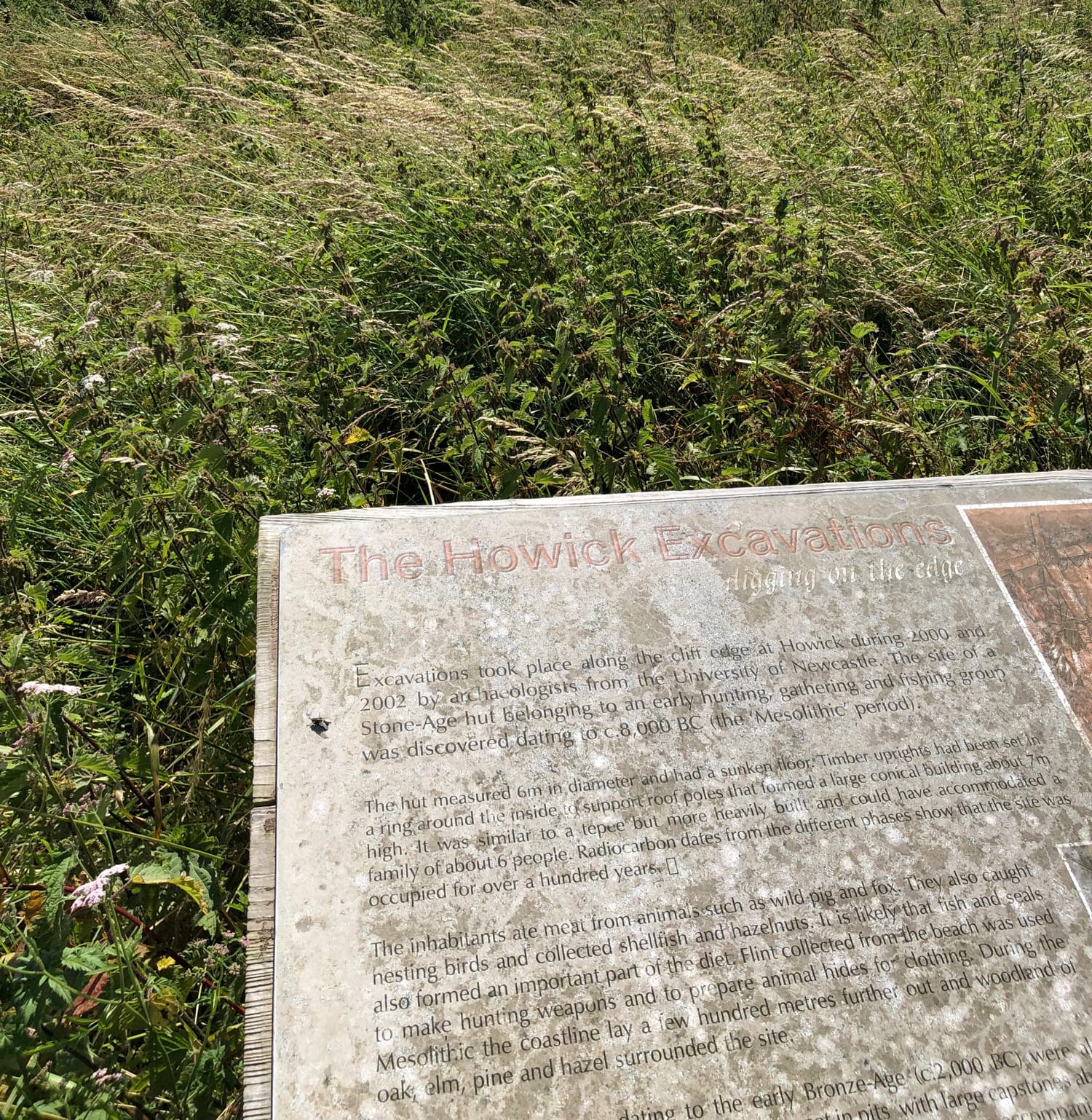
There’s nothing to see. The information board is almost entirely colonised by lichen or mould, its words obscured. The ground was invisible, completely swathed in nettles. What did I expect, really?
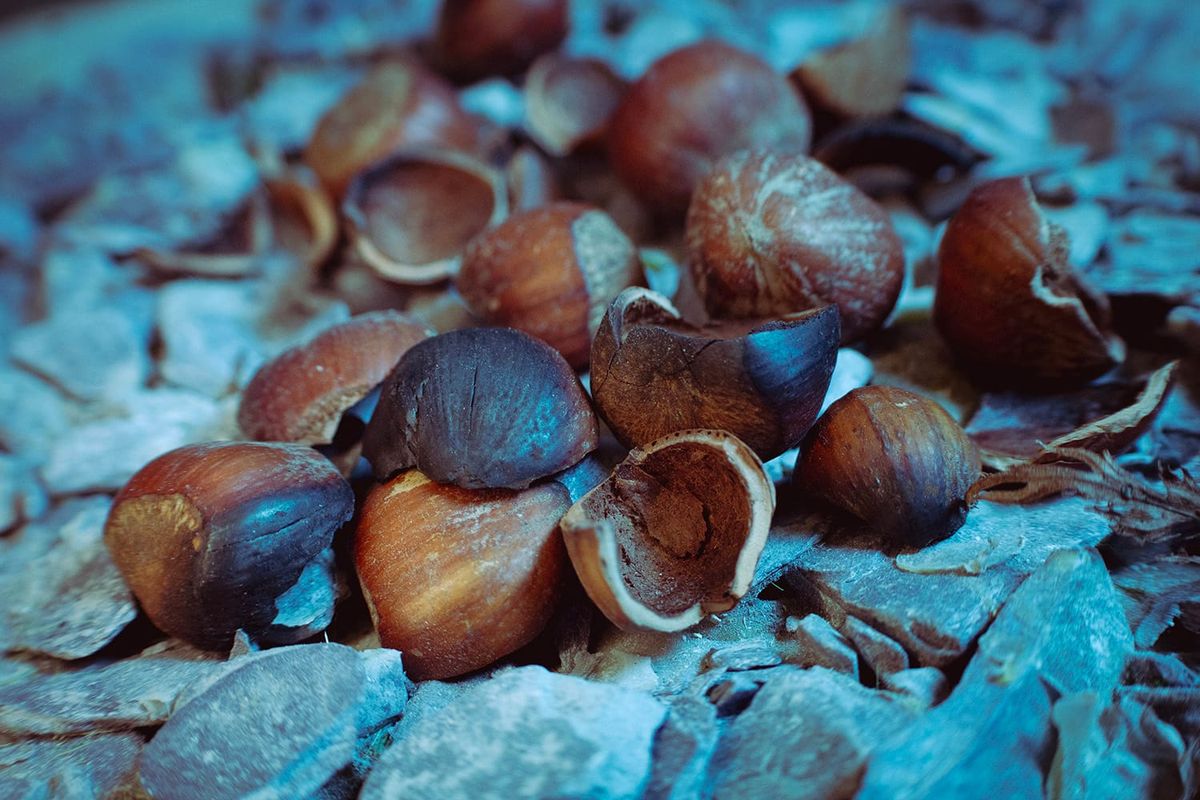
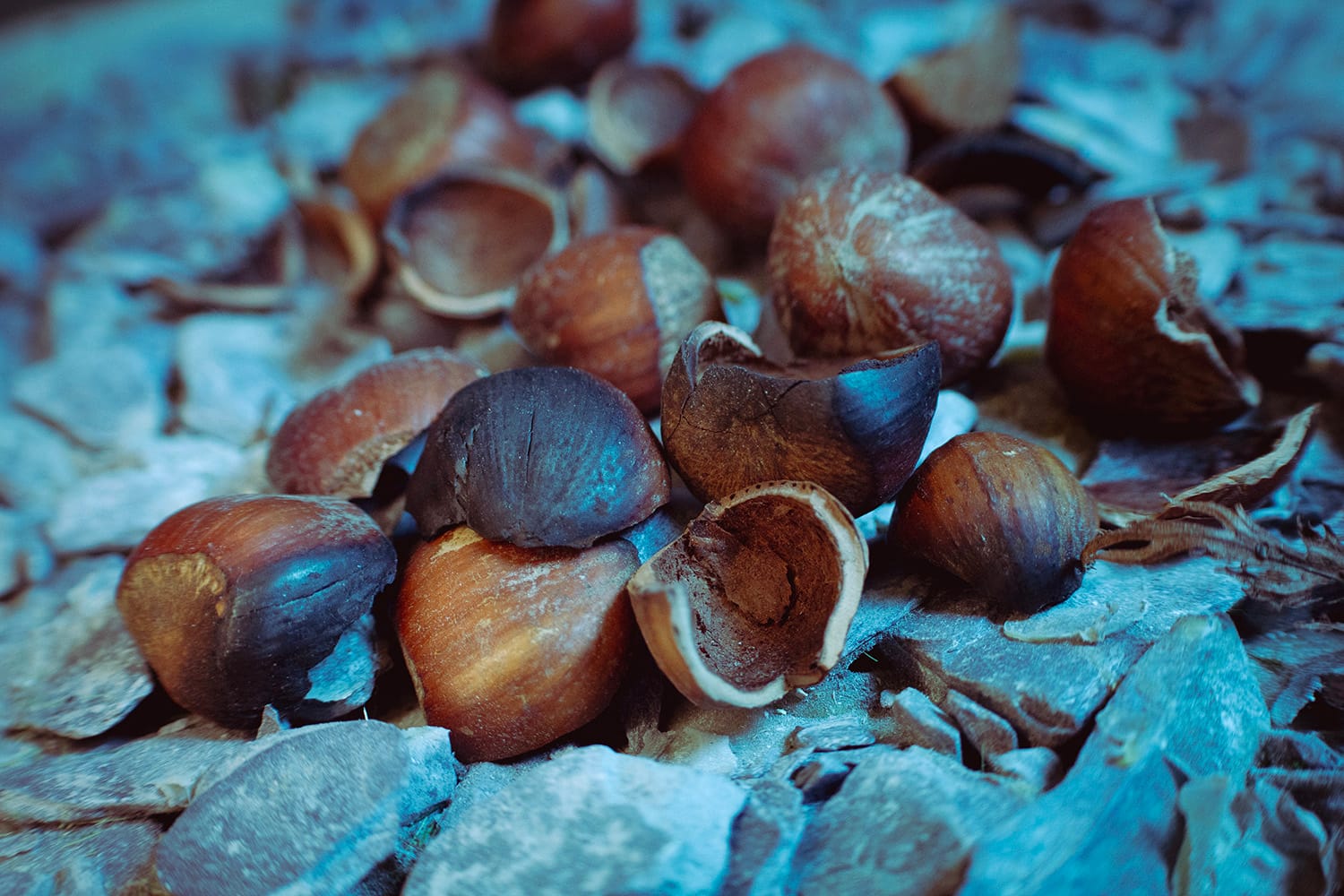
That holy ground under which lay the whisper of an ten-thousand year old shelter where hazelnuts were roasted in a fire, the charred shells discarded to persist for ten millennia before being uncovered as a marker that said “someone was here, someone enjoyed some hazelnuts in this spot forever ago. You know what they taste like. You’ve cracked open hazelnuts, and examined the kernel. Is it a good one? You were like them in that tiny way. Your shared physiology echoing small gestures across incomprehensible time.”- nothing there at all. The walk under a blistering sun wasted. The experience was one of blank modern farmland, ripped out hedges, monocultures. A nothing.
Or was it? The disappointment subsides. Perhaps I’m looking in the wrong way. I’ve brought something all this way that I didn’t need to. Carried an expectation like a boulder on my back. What is here? What is left? What will be left of you in ten thousand years? Will we leave an echo under nettles? The experience of walking to find nothing, while knowing something remains, even if we can’t see it - does that have value as its own thing? Of course.
Turning over ideas of disappointment at a lack of spectacle and finding something much smaller but much more resonant. Looking closer. Feeling harder. What is it that we’ve found? A specific kind of sadness that we had to walk to find.
What does it mean to walk so far and be denied that which we anticipated? How will we present the evidence to others? How do we talk about absence? Why is someone living here so long ago, cracking open hazelnuts important?
We need to build a fire and roast some hazelnuts.
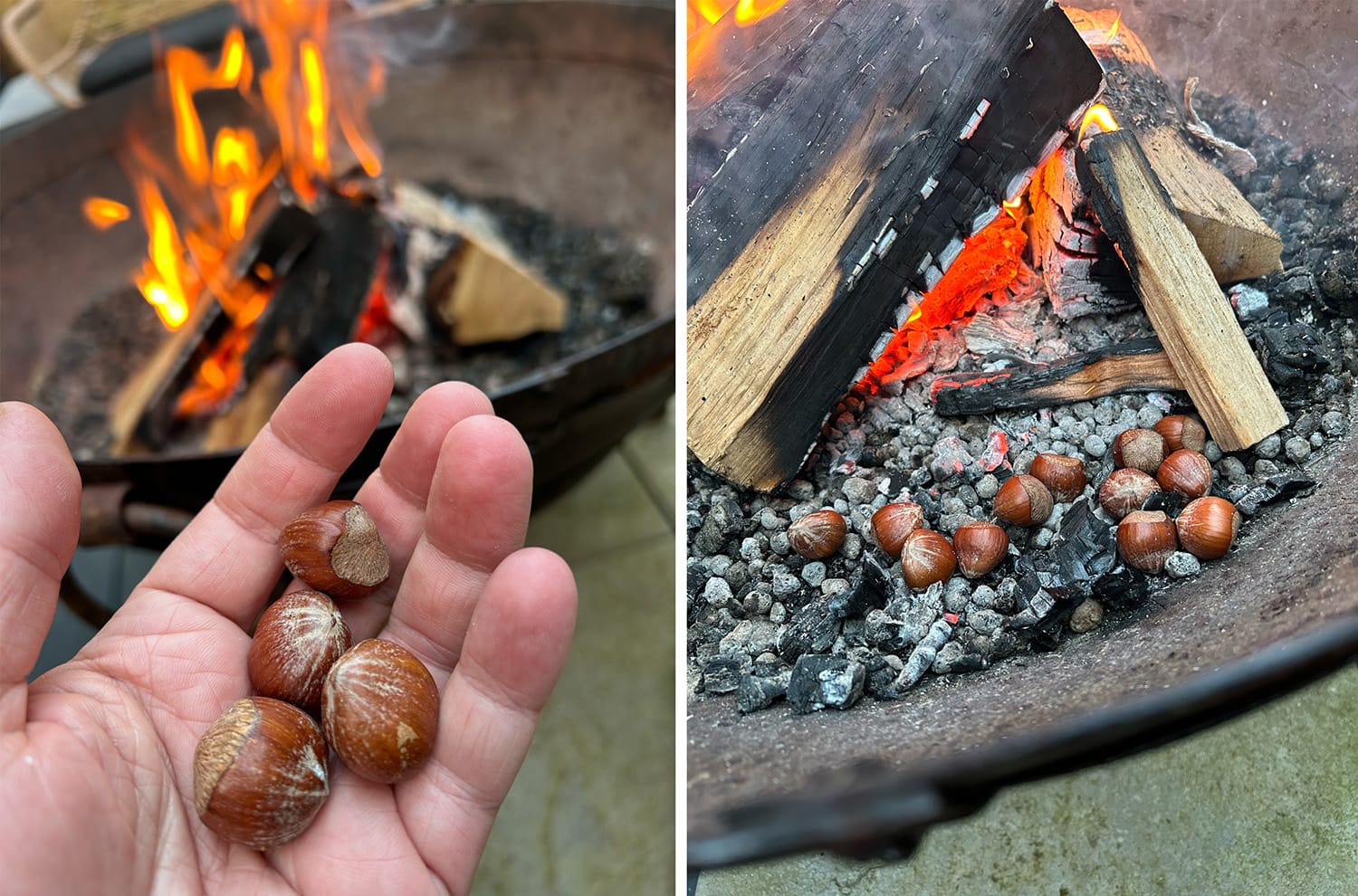
Even now I struggle to put words to the feeling. That’s the art. To feel and to translate feeling into something that can be communicated. A network, a communication, a connection across time and between people. Proving you even exist at all by sharing. Telling stories so that someone else can say “yes, I recognise we share a feeling of being alive. Although we appear different, I won’t hurt you because really we’re the same.”
Imagine thinking that avoiding that process is a good thing? Imagine taking the word “imagine” and using it to start your machine prompting process. The word “imagine”. Desecrating that sacred human activity of imagining and doing, in tandem, one after another in a chain all the way back to the first people to become aware that there’s another, invisible world inside us which only we can see, but which we can transmit something of to others. That we have the capacity to branch our perception away from the world outside ourselves and turn to the world inside ourselves, to make a future world that hasn’t happened yet. And then share it through learned and shared skills.
That we can quite deliberately gather experiences in the world, that we can synthesise new things from experiences we choose to have. That we can make what we imagine real, and get better and better at both the imagining and the making over time. And then reflect on the experiences of doing so. That we’re here, that we can change our environment by imagining it to be different and then making it so. That a better world is possible.
PostScript
“Education Scotland have their latest webinar for parents/carers on the topic on Artificial Intelligence and Children’s learning on Thursday 4th June between 4pm and 5pm. AI: what parents need to know | Digital learning, digital life, digital work”